Retinol Starters for Retinol Beginners
Retinol is the most evidence-backed skincare ingredient for fine lines, texture and uneven tone. It's also the one most likely to cause irritation if you start too strong, too fast. The result is that a lot of people try retinol, get peeling and redness, and give up before they see any benefit.
This guide is for anyone who wants to start retinol without wrecking their skin barrier. We've picked three beginner-friendly products at different price points and with different approaches. We haven't tested them on our own skin. What we've done is check what the brands state about concentration, formulation and use, what beginners report, and the fine print that decides whether a retinol is worth starting with.
Some links on this page earn us a commission. It doesn't change what we recommend. How that works.
Our take
Pick | Product | Size | Price | Strength | Best for |
Best overall | The Ordinary Retinol 0.2% in Squalane | 30ml | ~$6 | 0.2% | A very low starting point |
Best formulation | Typology Retinol Serum | 30ml | ~$35 | Check product page | A gentler, encapsulated formula |
Best for sensitive skin | Paula's Choice 0.3% Retinol + 2% Bakuchiol | 30ml | ~$35 | 0.3% | A lower-strength option with bakuchiol |
What to look for in a beginner retinol
Start at the lowest concentration. Beginner retinols are usually 0.1–0.3%. Higher concentrations aren't necessarily better — they're more likely to irritate. Start low and build up over weeks, not days.
Encapsulated formulas are gentler. Encapsulation releases the retinol slowly, which reduces irritation. If you have sensitive skin, look for encapsulated retinol or a formulation with soothing ingredients alongside it.
Pair it with barrier-supporting ingredients. Retinol is often formulated with ceramides, niacinamide or squalane to offset dryness. A retinol in a rich base is more tolerable for beginners than a thin serum.
The most common mistake: using it every night from the start. Beginners should use retinol two or three nights a week and build up slowly. Applying it to damp skin increases absorption and irritation — apply to dry skin.
The 3 picks
The Ordinary Retinol 0.2% in Squalane
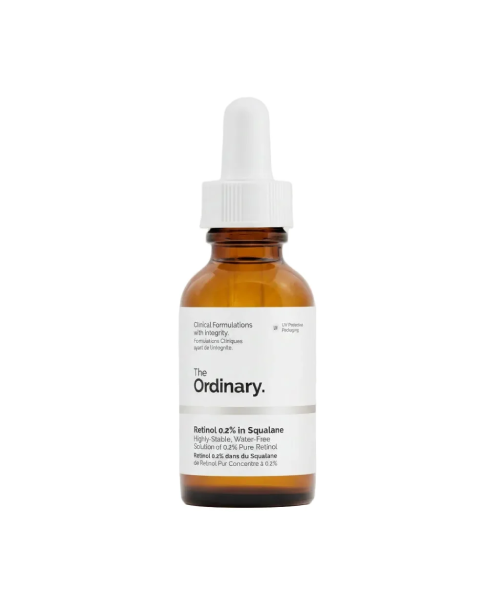
Price and retailer: Around $6 for 30ml at The Ordinary and retailers. Prices change, so check before ordering.
What it is: A very low-strength retinol (0.2%) in a squalane base. It's designed for beginners or for people who want a gentle introduction to retinol. The squalane base is hydrating and offsets some of the dryness retinol can cause.
Why it made the list: This is the lowest-strength retinol here and the cheapest, which makes it the safest way to start. The squalane base is more tolerable than a thin serum, and 0.2% is low enough to build up from. If you've never used retinol, this is where to begin.
What buyers say: The Ordinary's retinol gets positive feedback for being a gentle introduction. The recurring note is that it's still retinol — some beginners report irritation even at 0.2%, especially if they use it too often. Start with twice a week.
Fine print: 0.2% retinol in squalane. Use at night, two or three times a week to start. Apply to dry skin. Use sunscreen the next morning. Patch test first.
Good:
· Around $0.20 per ml
· The lowest strength here
· Squalane base offsets dryness
Weigh up:
· Still can irritate
· Not suitable for very sensitive skin
Typology Retinol Serum
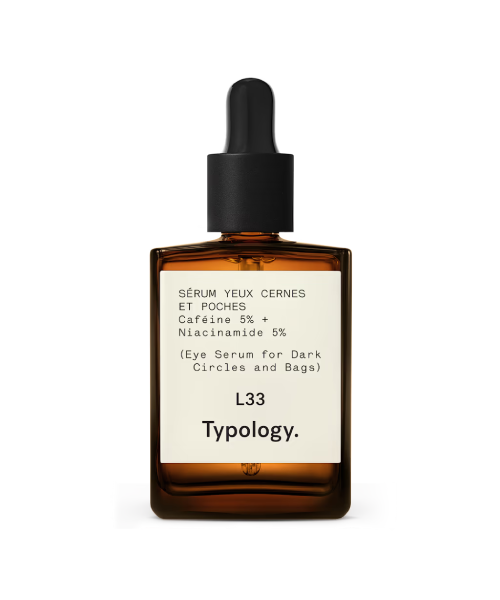
Price and retailer: Around $35 for 30ml at Typology. Prices change, so check before ordering.
What it is: A retinol serum from the French minimalist brand, formulated with a short ingredient list and a gentler approach. Typology formulates around specific concerns, and the retinol serum is designed for beginners and sensitive skin.
Why it made the list: This is the pick for anyone who wants a retinol that's formulated rather than just diluted. The texture is lighter than the squalane, and the formulation is designed to reduce irritation. At around $1.17 per ml it's more expensive, but the formulation is better for sensitive skin.
What buyers say: Typology's retinol serum gets positive feedback for being gentle and for the texture. The recurring note is the price — it's significantly more expensive than The Ordinary. Check the concentration on the product page.
Fine print: Check the concentration and ingredients on the product page. Use at night, building up slowly. Use sunscreen the next morning. Patch test first.
Good:
· Gentler formulation
· Lighter texture
· Short ingredient list
Weigh up:
· Around $1.17 per ml
· Check the concentration before buying
Paula's Choice 0.3% Retinol + 2% Bakuchiol
Price and retailer: Around $35 for 30ml at Paula's Choice and retailers. Prices change, so check before ordering.
What it is: A retinol treatment with 0.3% retinol and 2% bakuchiol, a plant-derived alternative to retinol. It's formulated with soothing ingredients and designed for people who want retinol benefits without the irritation.
Why it made the list: This is the pick if you've tried retinol and found it irritating. Bakuchiol is gentler than retinol, and combining it with a low concentration of retinol gives you the benefits of both. Paula's Choice is known for fragrance-free, research-led formulations.
What buyers say: Paula's Choice's retinol gets strong feedback for being gentle and effective. Buyers describe it as non-irritating and easy to layer. The recurring note is price — it's expensive per ml compared to The Ordinary.
Fine print: 0.3% retinol, 2% bakuchiol. Use at night, building up slowly. Use sunscreen the next morning. Patch test first.
Good:
· Combination of retinol and bakuchiol
· Gentler than retinol alone
· Fragrance-free
Weigh up:
· Around $1.17 per ml
· Still retinol — build up slowly
How to start retinol without irritating your skin
Start low and slow. Use a low concentration two or three nights a week. Build up to every other night, then nightly, over weeks.
Apply to dry skin. Retinol absorbs more on damp skin, which increases irritation. Wait a few minutes after cleansing before applying.
Use the sandwich method. Apply moisturiser, then retinol, then moisturiser again. This reduces irritation while still letting the retinol work.
Use sunscreen every morning. Retinol makes skin more sensitive to UV. Sunscreen is not optional.
Stop if your skin reacts. Mild flaking is normal in the first few weeks. Persistent redness, burning or peeling means you're using it too often or the concentration is too high.
Who should skip these
If you're pregnant or breastfeeding, skip retinol entirely — it's not recommended. If you have very sensitive skin or rosacea, talk to a dermatologist before starting. And if you want a treatment for acne, retinol can help but isn't a substitute for a dermatologist-prescribed routine.
Questions
What strength of retinol should a beginner use?
0.1–0.3%. Start at the lowest concentration and build up. Higher strengths are more likely to irritate.
How often should you use retinol as a beginner?
Two or three nights a week to start. Build up to every other night, then nightly, over several weeks.
Can you use retinol with vitamin C?
Yes, but it's usually better to use vitamin C in the morning and retinol at night, because both can irritate and retinol makes skin more sensitive to UV.
Does retinol cause purging?
It can cause a temporary adjustment period with flaking and breakouts in the first few weeks. This is normal. Persistent irritation is a sign to reduce frequency or strength.
Can you use retinol if you have sensitive skin?
Yes, if you start with a low concentration and build up slowly. Encapsulated formulas and formulations with soothing ingredients are gentler. Paula's Choice with bakuchiol is a good option.
What should you not use with retinol?
Avoid strong acids (AHA/BHA) in the same routine, and don't use retinol with benzoyl peroxide. Space them out and use sunscreen every morning.
The bottom line
If you want the safest starting point, choose The Ordinary Retinol 0.2% in Squalane. If you want a gentler formulation, Typology Retinol Serum is the one. And if you have sensitive skin, Paula's Choice 0.3% Retinol + 2% Bakuchiol is the most tolerable option.
Start low, use it two or three nights a week, and use sunscreen every morning. That's how retinol works without wrecking your skin.