Ethical Leather Shoes: 3 Brands With Proof
"Ethical" is the most overused word in fashion. Every brand claims transparency, most publish a page of aspirational language, and very few can tell you where the leather came from or who made the shoe. The difference between a real commitment and a marketing one is evidence — certifications, published audits, named factories, wage data.
This guide is for anyone who wants leather shoes without the unease of not knowing how they were made. We've picked three brands that publish more than most: a B-Corp with published maker wages, a French brand built on supply-chain transparency, and a small handmade brand that traces part of its chain. We haven't worn them. What we've done is check what each brand publishes about its leather, factories and labour, what independent ratings say, and the fine print that decides whether an ethical claim holds up.
Some links on this page earn us a commission. It doesn't change what we recommend. How that works.
Our take
Brand | Price range | Best for | What's published |
Nisolo | Approx. $150–$250 | Everyday leather shoes with labour transparency | B-Corp, published maker wages, Leather Working Group leather |
Veja | Approx. $150–$200 | Trainers and everyday shoes | Detailed supply chain, near-shoring, factory standards |
Adelante | Approx. $200–$300 | Handmade classics | Partial supply-chain tracing, handmade in Guatemala |
What "ethical leather" actually means
Traceability is the starting point. A brand that can name the tannery, the country of origin and the slaughterhouse is doing more than one that says "responsibly sourced". Leather is a by-product of the meat industry, so the ethics of leather are tied to the ethics of the supply chain behind it. Traceability doesn't make leather ethical on its own, but it's the precondition for any real claim.
Certifications are evidence; language is not. Leather Working Group (LWG) certification covers tannery environmental standards. B-Corp certification covers a company's overall social and environmental performance. Fair Trade audits cover labour. A brand with certifications has submitted to external scrutiny; a brand with only a "sustainability" page has not.
Labour transparency matters as much as materials. Leather can be traced and still be made in a factory with poor conditions. Look for brands that publish factory names, wage data or audit results. Nisolo publishes minimum wage data for its makers; Veja publishes factory standards; Adelante traces part of its supply chain and is rated by Good On You.
The most common mistake: assuming "vegan leather" is automatically more ethical. Most vegan leather is polyurethane, which is plastic-based and often worse for the environment than leather that lasts a decade. The ethical choice is usually fewer, better-made shoes in either material — not a disposable plastic alternative.
The 3 brands
Nisolo
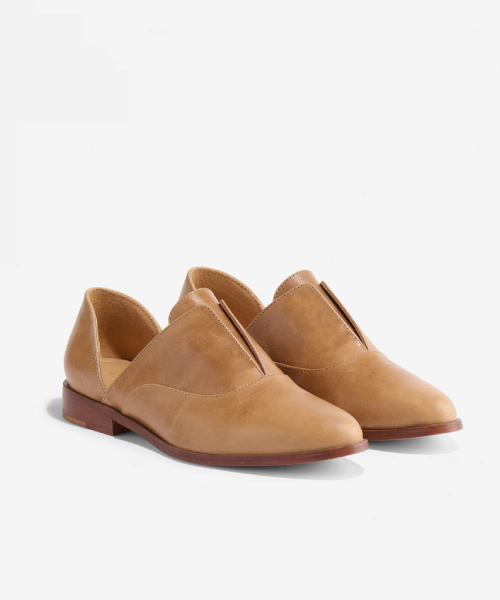
What it is: A US brand making leather shoes and accessories in Peru and Mexico. Nisolo is a certified B-Corp, uses Leather Working Group-certified leather, and publishes minimum wage data for its makers alongside the local living wage. It's one of the few footwear brands that puts labour numbers in public.
Why it made the list: Nisolo is the clearest example of a brand that publishes the evidence rather than the adjectives. The B-Corp certification is externally verified, the LWG leather certification covers tannery standards, and the wage data is the specific detail most brands avoid. Prices sit around $150–$250, which is mid-range for leather shoes but honest for the level of traceability.
What buyers say: Nisolo's shoes get positive feedback for leather quality and comfort after a short break-in. The recurring note is sizing — some styles run narrow, and buyers advise checking the size guide rather than assuming. The brand offers exchanges, which helps.
Fine print: Leather Working Group-certified leather. B-Corp certified. Published maker wages. Check the specific style's sizing and whether it runs narrow. Check the returns window and who pays return postage on international orders.
Good:
· Published wage data, not just claims
· B-Corp and LWG certified
· Leather that ages well
Weigh up:
· Some styles run narrow
· International returns can be costly
Veja
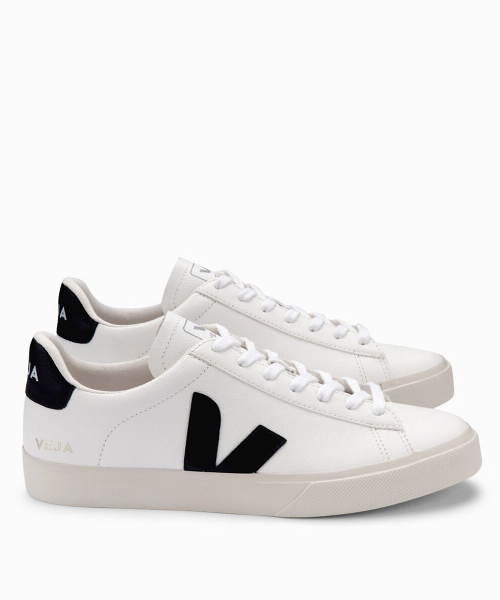
What it is: A French brand that has built its reputation on publishing its supply chain in unusual detail. Veja sources leather and rubber through traced channels, works with factories on published standards, and has more recently moved into near-shoring in Europe. It avoids traditional advertising and puts the money into supply-chain work instead.
Why it made the list: Veja is the most transparent brand here on where materials come from. The brand publishes its sourcing and factory relationships, and its near-shoring work in Europe is documented rather than announced. If you want to know how a shoe was made, Veja gives you more to work with than most.
What buyers say: Veja's shoes get mixed feedback on comfort — the brand's trainers are described as firm at first and needing a break-in, while the leather styles are more comfortable out of the box. The recurring note is that the sizing runs small, so size up if between sizes. Supply-chain transparency is consistently praised.
Fine print: Check the specific style's composition and where it's made — Veja's range includes both South American and European production. Sizing runs small. Check the retailer's returns policy, as Veja is stocked by third parties as well as sold direct.
Good:
· Detailed published supply chain
· Near-shoring documented, not just promised
· Materials traced beyond the leather
Weigh up:
· Trainers need a break-in
· Sizing runs small
Adelante
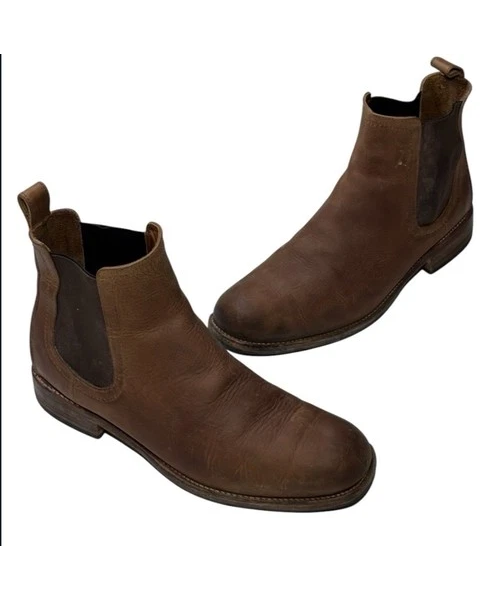
What it is: A small brand making handmade leather shoes in Guatemala, with a focus on classic styles and partial supply-chain tracing. Adelante is rated by Good On You and describes its work as handmade with attention to fair labour and some renewable energy in its supply chain.
Why it made the list: Adelante is the smallest and most craft-led of the three. If you want shoes made by named artisans rather than in a large factory, this is the closest option here. The tracing is partial rather than complete, which is worth knowing — it's a smaller brand with fewer resources for documentation than Nisolo or Veja.
What buyers say: Feedback on Adelante focuses on the handmade quality and the classic styles. The recurring note is that the brand is small, so stock and sizing are limited, and delivery can take longer than a large retailer.
Fine print: Handmade in Guatemala. Partial supply-chain tracing. Check current stock and sizing before ordering — the range is small. Check the returns window and delivery times.
Good:
· Handmade by named artisans
· Classic styles rather than trend pieces
· Smaller-scale production
Weigh up:
· Partial tracing, not complete
· Limited stock and sizing
How to judge an ethical leather claim
Ask for the tannery. If a brand can't name where the leather was tanned, the traceability stops at the cow. LWG certification is the minimum standard to look for.
Ask for the factory. A published factory list, audit result or wage data is evidence. A page of commitments is not.
Ask what happens at the end. Repair services, resoling and take-back schemes extend a shoe's life, which is usually the biggest environmental lever. A shoe worn for ten years is more ethical than a "sustainable" one replaced every season.
Who should skip these
If you want the cheapest leather shoe, none of these is that — all three sit at $150 and above, because traceability and fair labour cost money. If you want a very specific trend style, Adelante's range is too small. And if you want vegan shoes, none of these is vegan — Veja makes some vegan styles, but the leather range is the focus here.
Questions
What is the most ethical leather shoe brand?
There's no single answer, but Nisolo publishes the most specific evidence — B-Corp certification, LWG leather and maker wage data. Veja publishes the most detailed supply chain. Adelante is the most craft-led. Judge by what a brand publishes, not what it claims.
Is leather ethical?
Leather is a by-product of the meat industry, so its ethics are tied to that supply chain. Traceable, certified leather from a brand with fair labour practices is more defensible than untraceable leather. There's no perfectly ethical leather, only more and less transparent supply chains.
Is vegan leather better for the environment?
Usually not. Most vegan leather is polyurethane, a plastic that doesn't biodegrade and often lasts less long than leather. A well-made leather shoe worn for a decade has a lower impact than a plastic alternative replaced every year.
What does Leather Working Group certification mean?
It's an environmental certification for tanneries, covering water use, waste and chemical management. It doesn't cover labour or animal welfare, which is why it's one piece of evidence rather than the whole picture.
Are ethical leather shoes worth the price?
If you wear them regularly and they last, yes. A $200 pair worn for five years is cheaper per wear than a $60 pair replaced annually, and the labour and environmental standards are higher. The price reflects the traceability, not just the leather.
The bottom line
If you want the most published evidence, choose Nisolo — the wage data and certifications are the clearest proof here. If you want the most detailed supply chain, Veja is the one. And if you want handmade shoes from a small brand, Adelante is the craft option, with the caveat that the tracing is partial.
Buy the evidence, not the adjective. A brand that can name its tannery and its factory is doing more than one that can't.